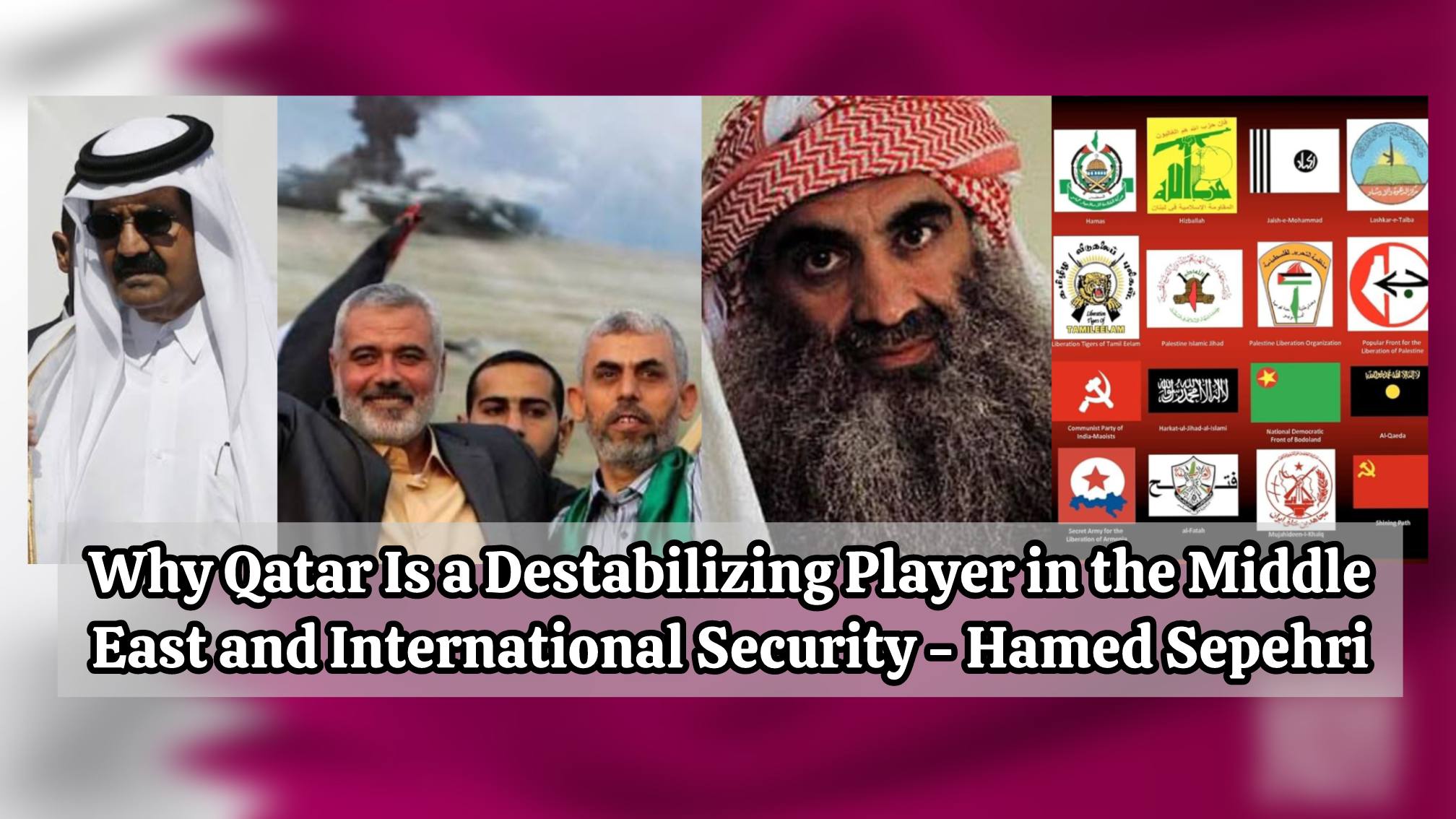
Despite its small population and limited geographic size, Qatar has managed to project an outsized—and deeply controversial—role in Middle Eastern politics and global affairs. Far from being a neutral mediator or benign energy exporter, Qatar has increasingly positioned itself as an opportunistic actor whose policies have contributed to regional instability, ideological polarization, and erosion of international norms.
Power Beyond Proportion: How a Tiny State Punches Above Its Weight
Qatar’s influence is not the result of organic diplomatic credibility or regional consensus. Instead, it is driven by three artificial amplifiers:
• Vast hydrocarbon wealth used as a political tool
• Media and soft-power leverage, most notably through Al Jazeera
• Strategic alignment with extremist or disruptive actors where it serves Doha’s interests
This combination allows Qatar to interfere simultaneously in conflicts from Afghanistan to Syria and from Turkey to Egypt accountability.
Qatar Foundation: Soft Power or Sophisticated Influence Network
The Qatar Foundation is frequently presented as a philanthropic and educational institution. In practice, critics argue it functions as a strategic cover for influence-buying.
Through generous grants, endowments, partnerships, and sponsorships, the Foundation has embedded itself in:
• Western universities and think tanks
• Media outlets and journalists
• Political and policy circles in Europe and North America
This financial proximity raises serious questions about conflicts of interest, muted criticism, and narrative control, particularly when Qatar’s regional conduct is under scrutiny.
Buying Legitimacy: From Newsrooms to Global Sports
Qatar’s influence operations extend beyond academia and policy circles into global culture and sport. The most visible example is its deep entanglement with FIFA where massive financial commitments helped secure global legitimacy despite serious human rights and governance concerns.
This strategy follows a clear pattern:
• Money replaces credibility
• Sponsorship substitutes for reform
• Visibility masks behavior
The result is not soft power rooted in shared values, but reputation laundering on a global scale.
Conflict Zones and Ideological Meddling
Qatar’s foreign policy footprint reveals a consistent tendency: supporting or enabling actors that destabilize existing state structures.
• In Afghanistan, Doha positioned itself as a diplomatic gateway for the Taliban, gaining leverage without responsibility.
• In Syria, Qatar backed Islamist factions that prolonged the conflict and weakened prospects for a unified post-war state.
• In Egypt, it openly supported the Muslim Brotherhood, undermining regional stability after the Arab Spring.
• In Turkey, it became a financial lifeline for Erdoğan’s increasingly authoritarian system.
• Even in Iran, Qatar balances between cooperation and opportunism, benefiting from chaos rather than stability.
This is not mediation—it is selective intervention designed to maximize leverage.
The Al Jazeera Factor: Narrative as a Weapon
Al Jazeera, Qatar’s most powerful global tool, operates less as a neutral media organization and more as a foreign policy instrument. While exposing abuses by Qatar’s rivals, it systematically downplays or ignores:
• Qatar’s own political structure
• Labor and human rights concerns
• Its support for radical or polarizing movements
Control of narrative has become as central to Doha’s strategy as control of capital.
Why Qatar’s Role Is Dangerous for Global Stability
Qatar’s model sets a troubling precedent:
• Wealth can override accountability
• Influence can be purchased without legitimacy
• Small states can destabilize regions without consequences
Rather than contributing to collective security, Qatar often exploits fractures, fuels ideological extremism, and weakens international norms—while shielding itself behind money, media, and institutions.
Influence Without Responsibility
Qatar is not powerful because it is respected; it is influential because it is rich, agile, and unconstrained. Its behavior illustrates how unchecked financial power, when combined with ideological ambition, can destabilize entire regions.
Until Qatar’s actions align with transparency, responsibility, and genuine respect for international norms, it will remain not a stabilizer—but a sophisticated disruptor in Middle Eastern and global security.


دیدگاهتان را بنویسید