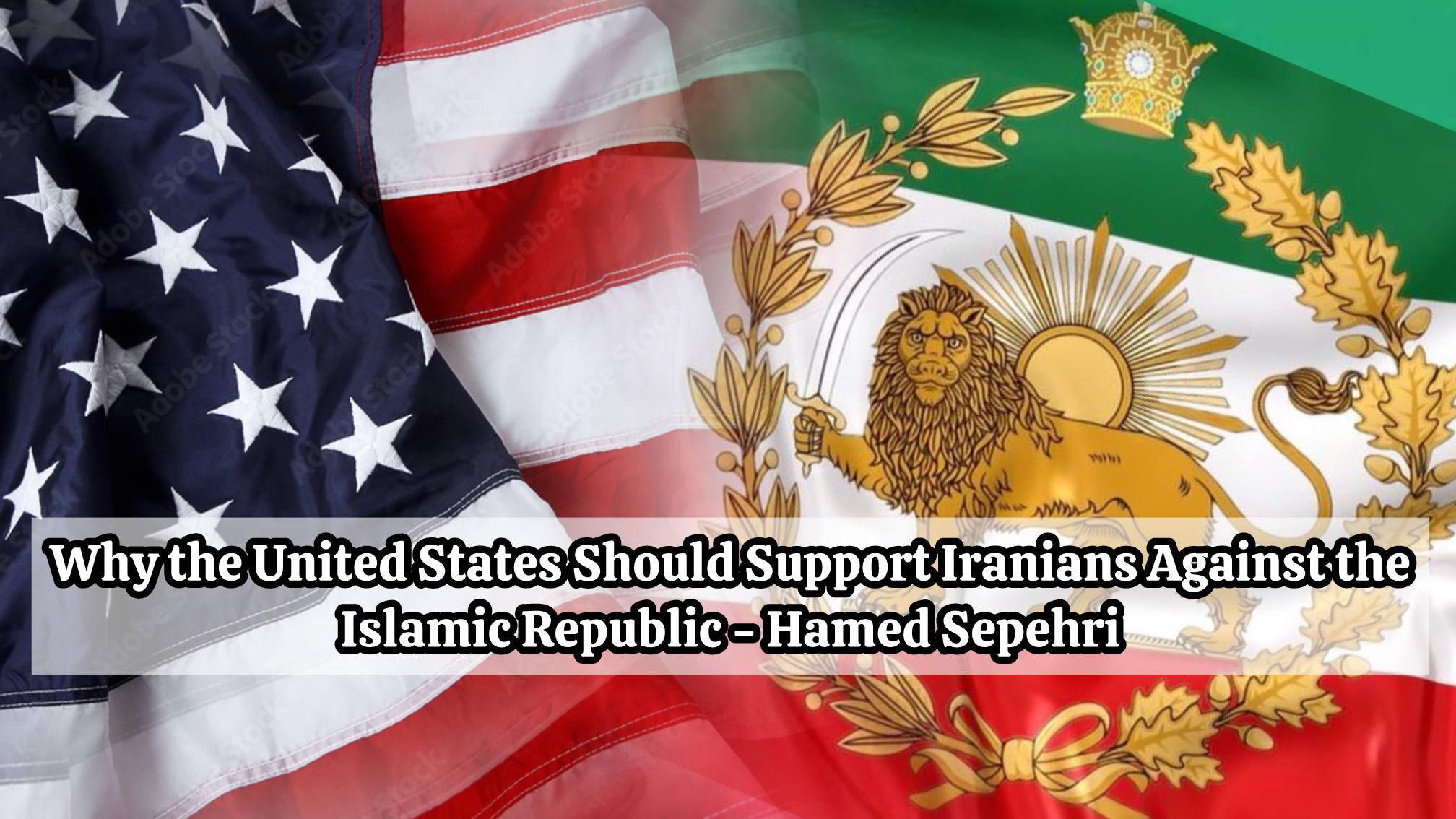
For more than four decades, the Islamic Republic in Iran has ruled through repression, ideological extremism, and systematic violence against its own people. In recent nationwide uprisings, tens of thousands of Iranians have been killed, imprisoned, or permanently scarred by a regime that views civil resistance not as dissent, but as an existential threat to be crushed.
The question before the United States is no longer whether the Islamic Republic is illegitimate, this is evident to the world, but whether continued inaction serves American moral values, homeland security, and long-term national interests.
A Moral and Strategic Imperative
Even if one sets aside the United States’ historical role as a defender against crimes against humanity, the survival of the Islamic Republic directly endangers American security. This regime has built its identity on hostility toward Western civilization, rejects human rights as a principle, and elevates ideological violence over international norms.
Allowing such a system to endure, particularly while it violently suppresses a population demanding freedom—creates a precedent that emboldens authoritarian regimes globally. Worse, it allows an openly hostile power to gain time, resources, and leverage.
Support Does Not Mean Ground War
Supporting the Iranian people does not require deploying American troops or repeating the mistakes of Iraq and Afghanistan. Iran is fundamentally different:
• The uprising is indigenous, not foreign-imposed
• The population overwhelmingly rejects the ruling ideology
• The state lacks legitimacy, not opposition
The United States possesses overwhelming advantages in technology, intelligence, and strategic pressure, which—if aligned with the will of the Iranian people—can decisively shift the balance without a conventional invasion.
Six Strategic Pillars of Support
The following measures should be understood as coordinated strategic pressure, not isolated actions, aimed at accelerating an inevitable transition already demanded by Iranian society
1- Disrupt the Regime’s Illicit Revenue Streams
Preventing the regime from monetizing illegally traded oil weakens its ability to fund repression, militias, and external destabilization. Financial pressure has proven far more effective than symbolic sanctions.
2- Neutralize Repressive Command and Control
Modern authoritarianism relies on centralized communications. Disrupting these systems during mass unrest limits the regime’s capacity to coordinate violence against civilians.
3- Counter State Propaganda
The Islamic Republic’s survival depends heavily on information control. Reducing the reach of state propaganda allows independent voices and real-time truth to reach the population.
4- Degrade the Regime’s Capacity for Internal Violence
Targeted, defensive measures that reduce the regime’s ability to mobilize armed repression against civilians fundamentally alter the cost-benefit calculation for those enforcing brutality.
5- End the Illusion of Negotiation
A clear message must be delivered: there will be no deal, no normalization, and no rehabilitation of this regime. The only acceptable outcome is an unconditional end to its rule.
6- Recognize a National Unifying Figure
Political collapse without a recognized transitional figure risks chaos. Crown Prince Reza Pahlavi represents a unifying national symbol for millions of Iranians across ideological, ethnic, and religious lines. His commitment to secularism, territorial integrity, and democratic choice provides continuity and prevents a power vacuum.
Why Iran Is Not Iraq or Afghanistan!
Iran is a civilization-state with deep institutional memory, a strong national identity, and a widely recognized leadership figure capable of overseeing transition. The comparison to failed post-intervention states is therefore false and misleading.
With the Islamic Republic removed, Iran can rapidly re-integrate into the global economy and reclaim its trajectory as a stable, developed nation.
The Cost of Inaction
If the regime survives this critical moment, two outcomes become increasingly likely:
1-Pursuit of weapons of mass destruction as a survival guarantee
2-Strategic absorption into China’s regional architecture
A regime-controlled Iran aligned with Beijing would dramatically weaken U.S. influence across the Middle East, threaten global energy markets, and provide China access to immense regional resources and strategic corridors.
The cost of confronting the Islamic Republic later—once it is nuclear-armed or fully integrated into rival power structures—will be exponentially higher.
As my conclusion the Iranian people are already fighting their own battle. What they require from the United States is not occupation, but decisive strategic alignment.
History rarely offers moments where moral responsibility and national interest so clearly converge. Supporting the Iranian uprising against the Islamic Republic is not only the right choice—it is the prudent one.
The alternative is to delay the inevitable, at far greater cost to Americans, Iranians, and global stability alike.




دیدگاهتان را بنویسید